
Ceuta (a)
Ahead of Málaga fans crossing the Mediterranean to wonderfully quirky Ceuta this coming weekend, I wrote about my own experience travelling to the exclave as a malaguista two years ago...

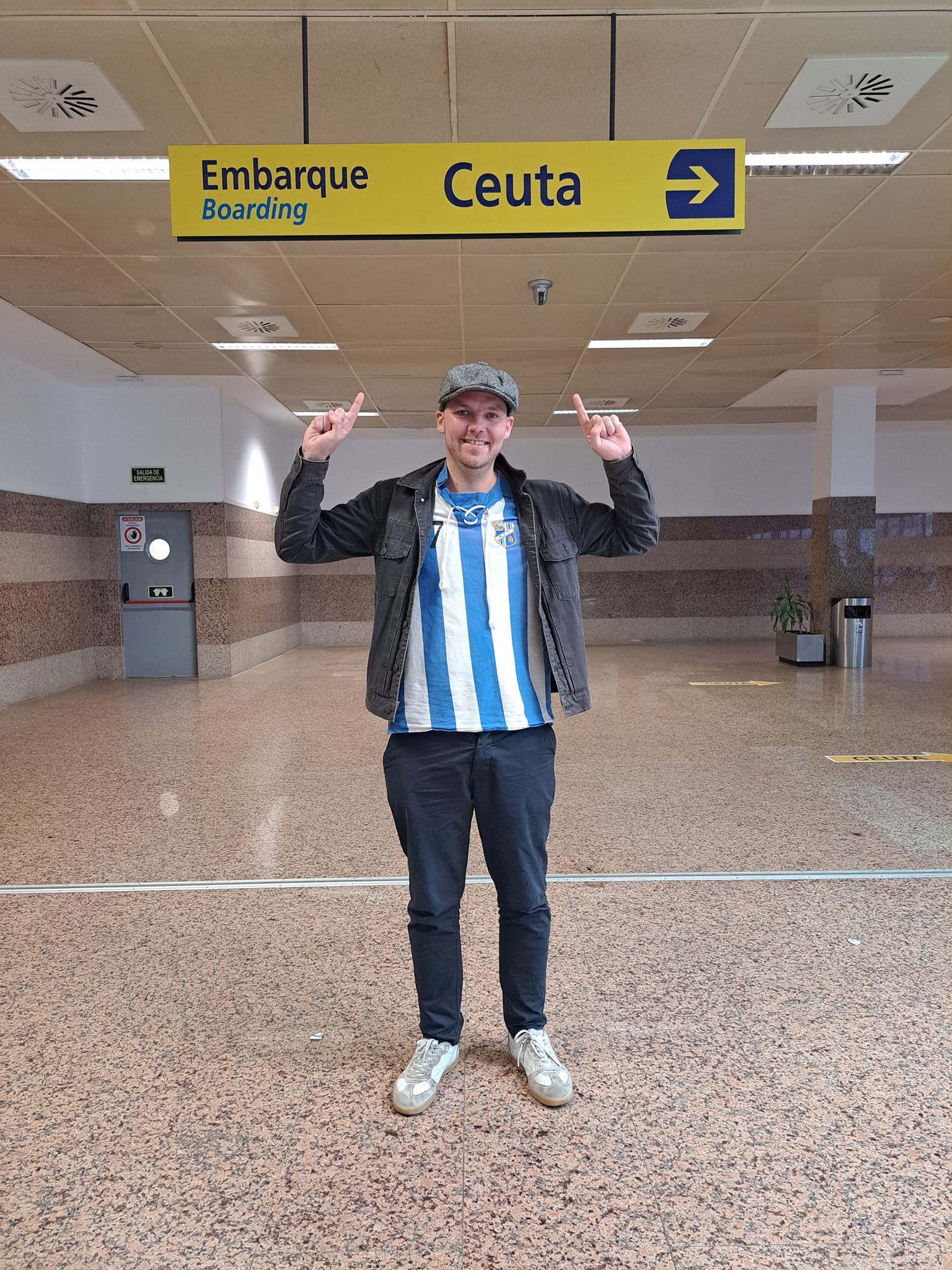
This weekend, Málaga CF are off on a swashbuckling adventure over land and sea. Sadly, it’s an adventure I will not be making this season - but it is a voyage I made two years ago. Perhaps it is my favourite tale of travel with Los Boquerones so far, which is saying something as Málaga lost 3-2 back in that warm January afternoon in 2024. As the fixtures computer churned out the road map for the 2023/24 Primera RFEF season, my eyes immediately went searching for one game: Ceuta (a).
2023 saw Málaga pushed down ‘The Well’ - el pozo - the nickname given to the unforgiving Spanish third tier. Once you fall into this abyss, it is a tough and treacherous climb out of it. With such ominous prospects ahead, we had to find some joy in the well’s unwelcoming walls. Luckily, Spain is bountiful with beautiful cities and pueblos to indulge in - so virtually every trip can be made into a fun one (even in some of Spain’s rarer, less salubrious corners). So an excuse to go on a tour of the well’s towns and cities sounded good to me.
Despite the foreboding pre-season forecasts, Málaga did manage to clamber back up and out of el pozo at the first time of asking. It was a very dramatic, last-gasp escape from the third tier, but it was an escape. However, undoubtedly, despite some nervy moments along the way, the climb had been a fun ascent. I watched our boys play in stunning cities such as Córdoba, Granada and Vigo; I had the joy of being able to say, ‘I’m off to Ibiza away this coming weekend’ and then watched Málaga battle to a worthy draw under a burnt-orange, Balearic sunset; and then there was THAT trip to Tarragona…but that’s a tale for another time. The undoubted highlight of my travels in the third-tier though was my trip to Ceuta - in northern Africa...well, sort of Africa.
Ceuta is a geographical glitch - at least in terms of pure geography. Not to get myself into any geopolitical bother, I will add here that, politically and officially, Ceuta is definitely a part of Spain. It just happens to be on the other side of the Mediterranean on the African mainland - half battered by the sea on one side, squeezed against Morocco on the other.
It was the Portuguese who originally captured Ceuta at the start of their ‘Age of Discovery’ in the 1400s, giving them their first foothold in Africa. However, when King Sebastian of Portugal died, heirless, Philip II of Spain seized the throne, leading to Spain and Portugal being ruled by the same monarch from 1580 to 1640. This meant that Ceuta was now governed by a Spanish ruler in this Iberian Union. When Portugal regained independence in 1640, Ceuta remained loyal to the Spanish crown and so, in 1668, a treaty was signed that recognised Spain’s sovereignty over Ceuta. However, although officially Ceuta is a part of Spain, its Moroccan neighbours still dispute this; Moroccan authorities still challenge Spain, calling Ceuta a remnant of a colonial past which should be handed back over. It’s a sore subject.
Ceuta and Málaga’s January 2024 clash kicked off at the unseemly time of noon on a Sunday. The Sunday kick-off gave me the opportunity to make a weekend of it - something I was keen to do. Ceuta had proved alluring for a while to me, since, on a clear day, you can make out the shadowy presence of the exclave 80km across the sea from my Marbella home. I’d be setting sail further down the coast in the rugged port city of Algeciras (one of the less glamorous cities on our tour of el pozo a few weeks after our Ceuta trip). A slightly choppy, hour-long crossing later, and I arrived in Ceuta before noon. I had a full Saturday to explore the exclave.
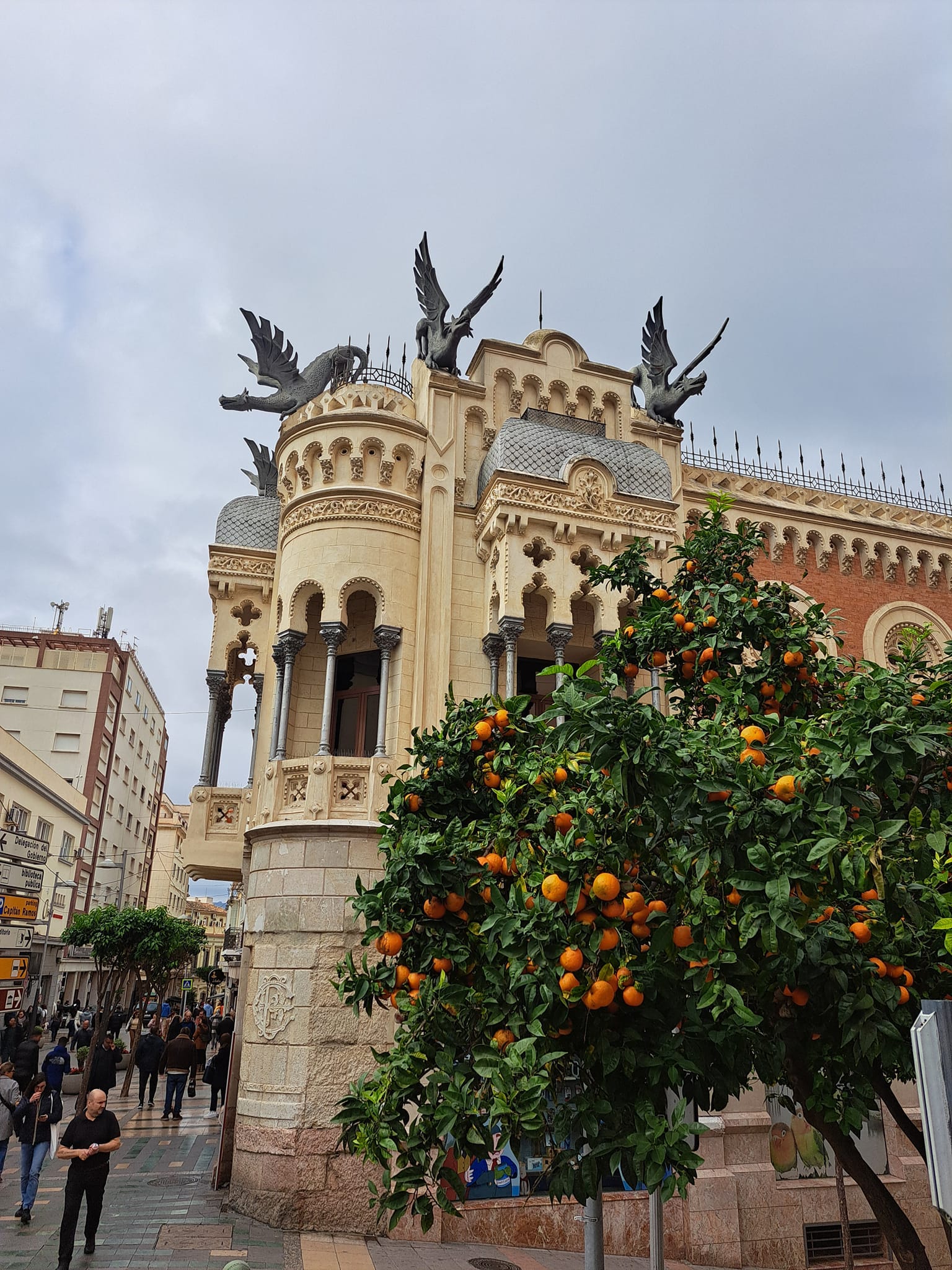
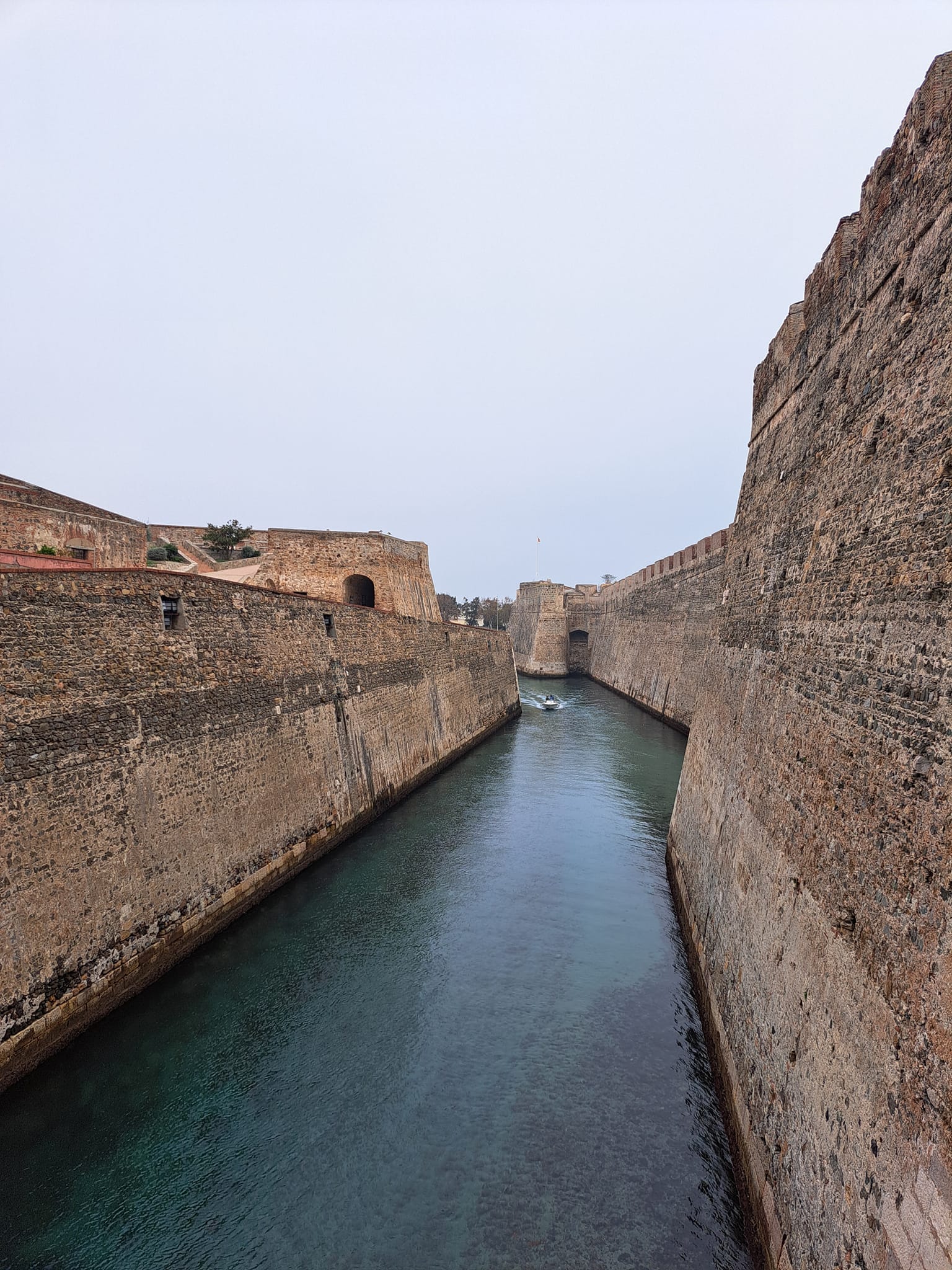
I began on the main high street with its wonderfully tattered-looking buildings and architectural blurring of Spanish and Moorish. The city itself is not exactly ornamental or grand, but it has a worn beauty and majesty to it. I absolutely loved it from the moment I entered the main city past the statue of Hercules pulling at the famed Pillars of Hercules. Mythology states that Hercules pulled apart the Rock of Gibraltar and Monte Hacho in Ceuta to form the Mediterranean Sea and the gateway to the ancient world. I wandered through the famous city walls which then led me up the cliffside roads which look across the Mediterranean and towards my pensión, located just away from the main hub of the small city. En route I spied a small bar, seemingly wedged into some residential garages. This looked like a fun little stop off before checking in.
“¡Málaga!” came a rasping bellow behind me as I ordered my beer. Indeed I was wearing a retro Málaga shirt, so this seemed to be addressed to me. I turned around to find a full table of men and women of different shapes, sizes and ages with plates and plates of fried fish and meats and empty bottles of beer scattered. And this was the start of what really made me fall in love with Ceuta. The people. Especially these fans of UD Ceuta. I’d basically barely said the word “Hola” before I was ordered to sit down with them; in a whirlwind of insistences, I was forced to help myself to the food and the beers that were already on its way. I was introduced to everyone and learned the various dynamics between the group - fathers and sons, boyfriends and girlfriends, taxi driver and passenger - with Tomas (a sort of Spanish Greg Davies lookalike) acting as my guide. He is a Ceuta native who now lives with his English wife just down the coast from me in Mijas on the Costa del Sol. He seemed to be one of the main men of this particularly popular fan group that certainly had their wild side too; which was fitting since the peña is named Peña Tarzan. There was also a lovable character amongst the crew who everyone simply called Pavarotti - a man adored and respected amongst the Ceuta fanbase - and a taxi driver who was insisting he’d drive me to my hotel and anywhere I wanted to go in the exclave, like my own little private chauffeur. What a bunch. This bar was one of the favoured meeting places of this affable gang. The openness and welcoming nature of these fans and the club itself is acknowledged on the shirt of UD Ceuta, as below the club badge you will find a the Christian Cross, the Star of David, the Islamic crescent and Hinduism’s Om symbol; a lovely nod to the four religions that happily coexist in the city.
Stopping in that bar was the best decision I could have made that weekend.
“What are you doing tonight?” If I had any fixed plans, I knew it was futile to resist the invitation of my new Ceuta pals. I was off for a night out with the locals.
Later that evening, I found myself out in town - and town was lively indeed. Partly thanks to the gregarious locals (so friendly) and the growing Málaga contingent making it across the Med. We were in a bar just off the main street where I was introduced to some of the local ultras and a Betis fan who claimed to be playing the violin prematch on the pitch the next day. On sitting outside the bar, a familiar sound travelled through the air: Málaga chants. 50 yards round the corner was a large gang of Malaguistas outside a hotel waiting for the team’s arrival. It was January and Málaga were starting the New Year in the hunt for automatic promotion. There was plenty of ánimo from the travelling fans as the players walked up the street from the bus, grinning and bemused at the reception they were receiving. Equally, the locals looked overjoyed with this mania that the Málaga fans were bringing to their streets. Soon, the press were around the fans as much as the arriving players. My taxi driver friend was greeting them all.
“He’s come all the way from Scotland for this?” he said erroneously in more ways than he realised. Thus there is some footage of me on some local Ceuta news site bellowing into my new taxi driver friend’s face, “NO! GALES!” making it clear that he’d got his Celts mixed up more emphatically than I had meant to.
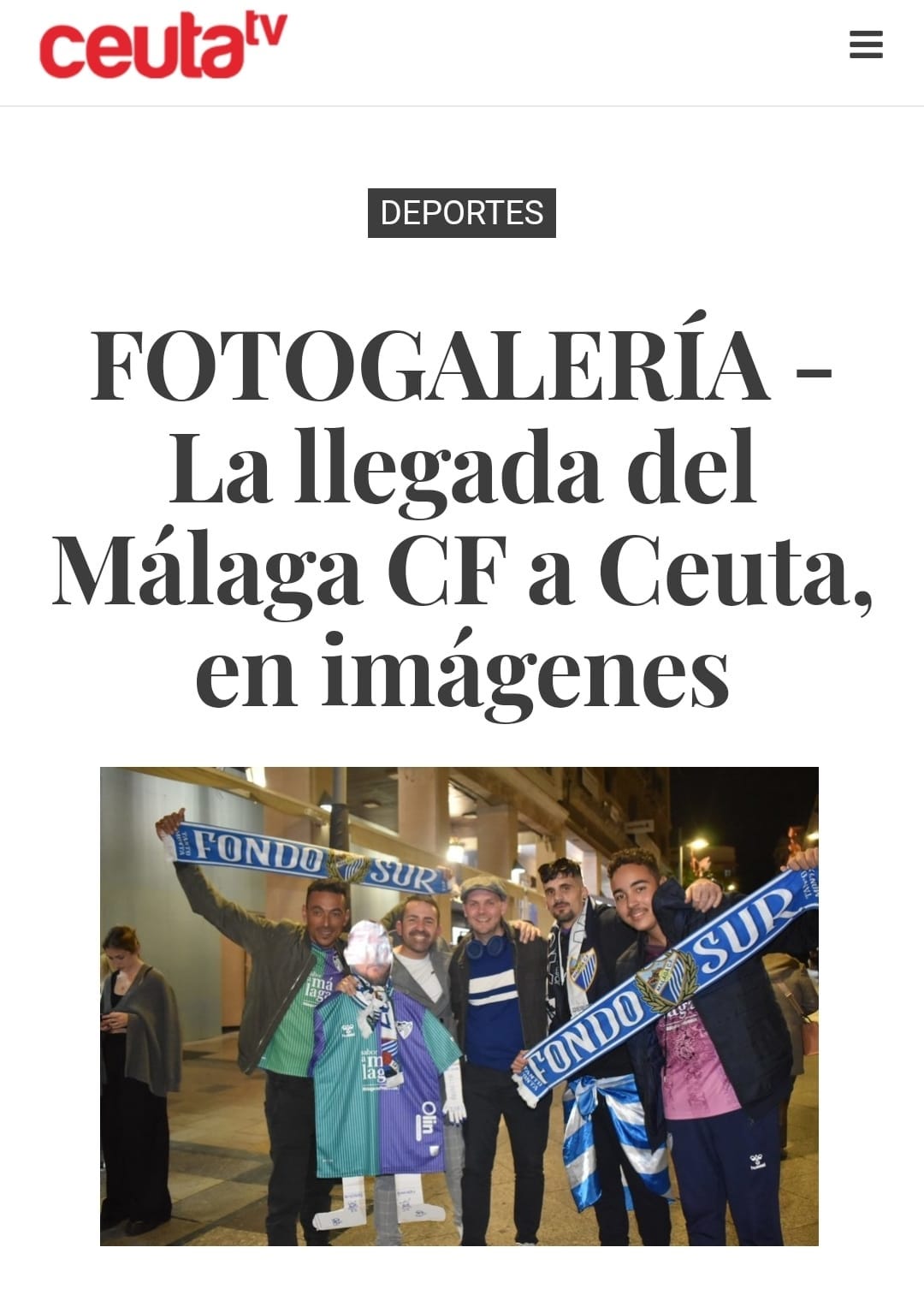
Selfies with the players were taken, the local press got their shots and then it was time for some more shots, as my Ceuta pals directed me to the nearest bar/club. In the mix of shots and beers, the lad who had misidentified me as Scottish wanted to make amends and offered to buy me a drink. I thought this meant a beer, but it turned out to be what felt like a pint of vodka and coke. I am certainly no vodka drinker. We were past midnight by now and full on vodka and generally Ceuta buzz. I figured this was a good time to call it a night ahead of the ridiculous noon kick-off time Primera had given us.
Coffee and a breakfast bocadillo acquired, a troop of Málaga fans and I headed towards Estadio Alfonso Murube. A rare thing in Spanish football: a stadium named after a player instead of a club president or official. General Franco had launched his coup d’état of Spain from Ceuta and, having played three seasons at Ceuta, 28-year-old Murube found himself on the side of the Falangists as he headed across the water to fight against the Second Republic. Whether he was committed to the Francoist cause or whether he fought out of fear of being arrested isn’t clear, but he was killed in combat by Republican forces in 1938, near Aranjuez. Four years later, with the Spanish Civil War over, Ceuta’s Francoist authorities chose to honour the popular player - who originally hailed from near Sevilla - by bestowing his name on the stadium.
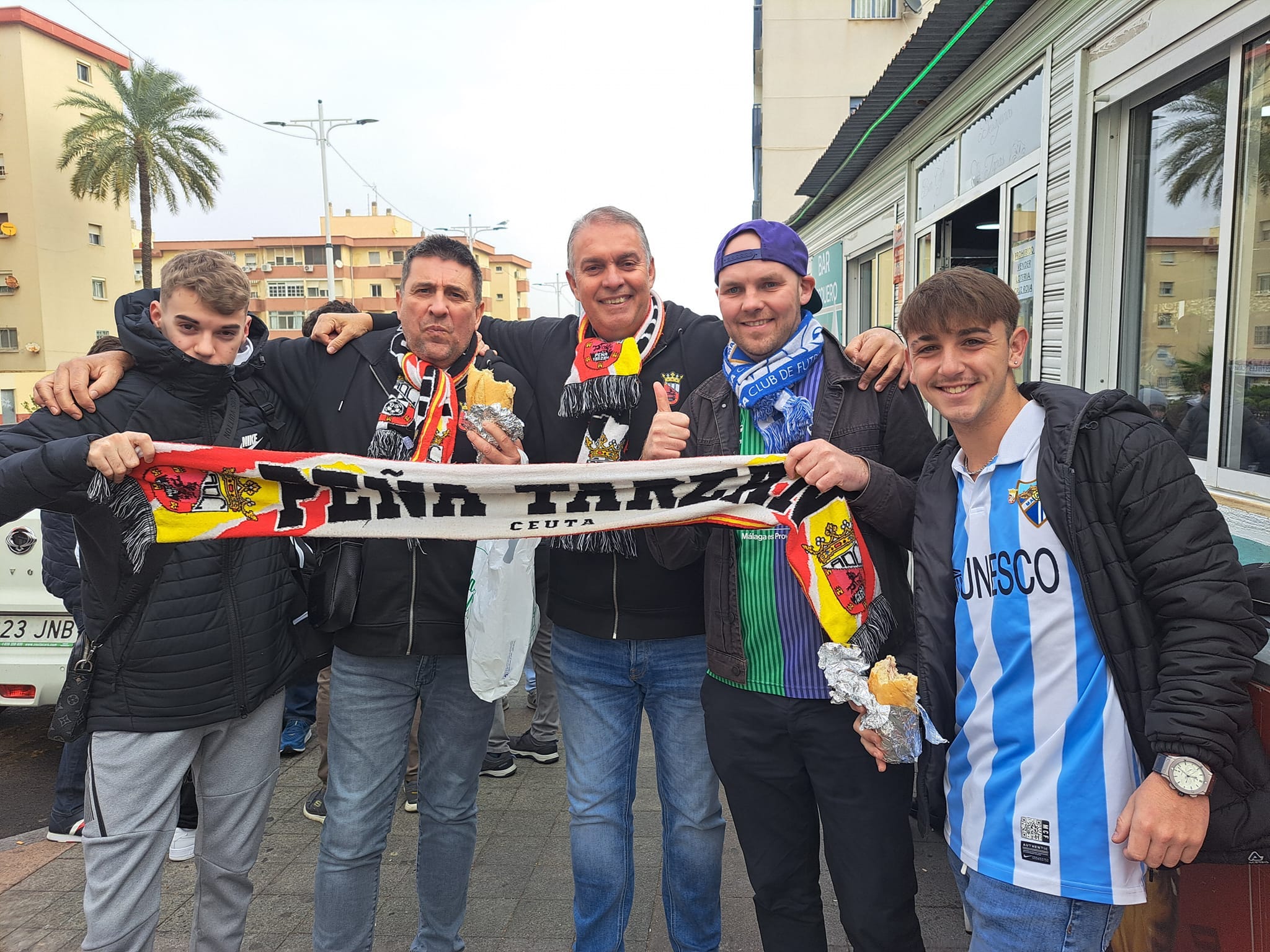
On this misty Sunday morning, we did not head straight for the ‘ALFONSO MURUBE’ daubed stadium though. The clocks may have read ‘A.M.’ but breakfast beers with Tomas and the gang were very much on the menu just down the road from the stadium in Restaurante Pesquero.
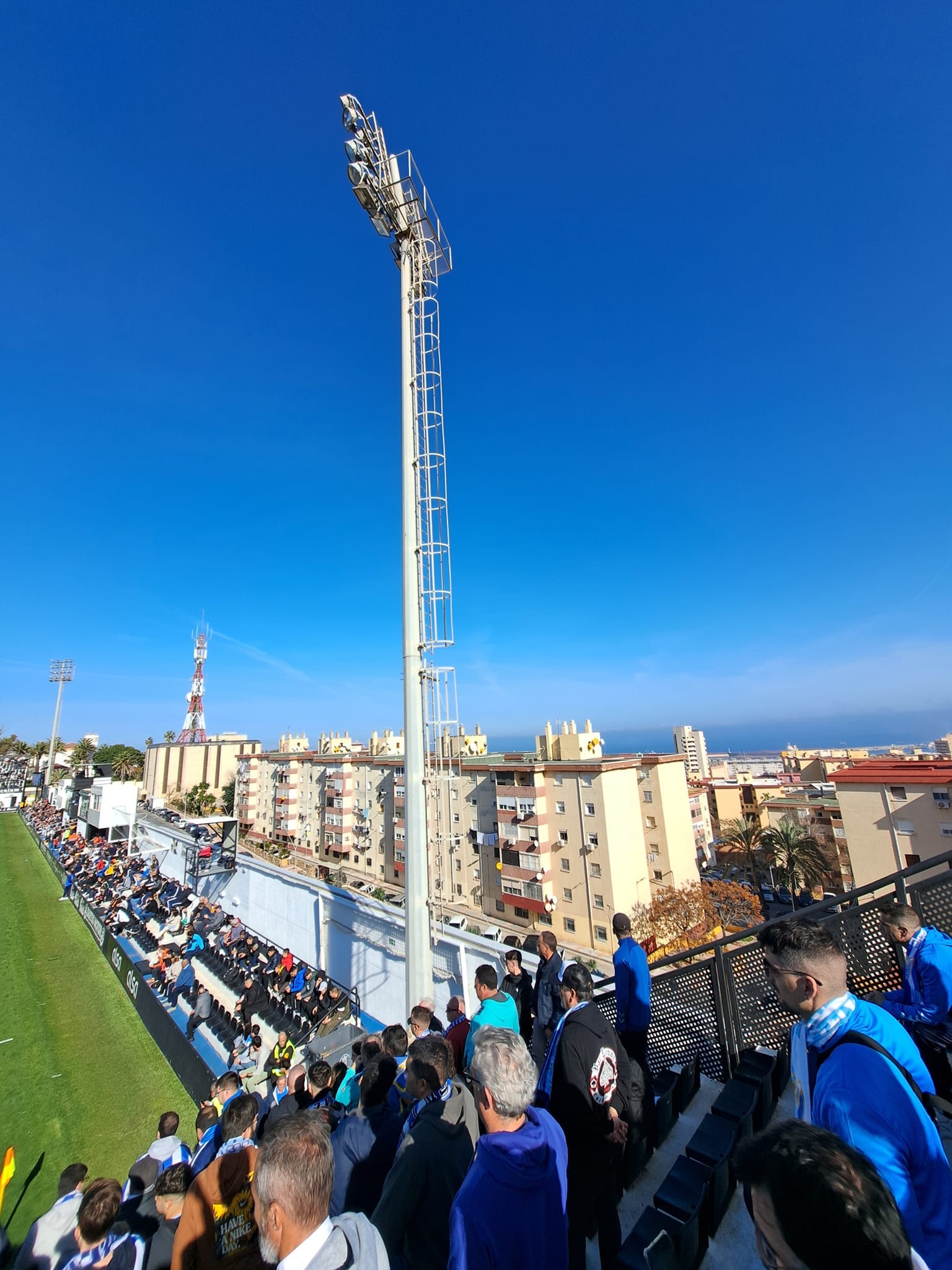
Ceuta’s home is flanked on either side by apartment blocks, but the fact the ground is on a small hill meant that from our view from the away end in the corner of the ground, we could see over the blocks to our right and right across the Mediterranean. A lovely view - once we could see it. An array of tankers, yachts and fishing boats would eventually reveal themselves on the water, but not until the game got underway as a smothering sea fog descended on the stadium before kick-off. The ground holds 6,500 fans and it is a tightly squeezed affair. However, despite the openness of the ground, the atmosphere was electric and seemed to blow the sea fog away in the opening minutes. Maybe it was the energy instilled into the crowd by a strange sound resonating around the - strange for a football ground at least: a violin. My mate from the night before was on a fine old skip around the ground, chirpily stringing out some fast paced violin bangers (can you have bangers on the violin? I guess so…)
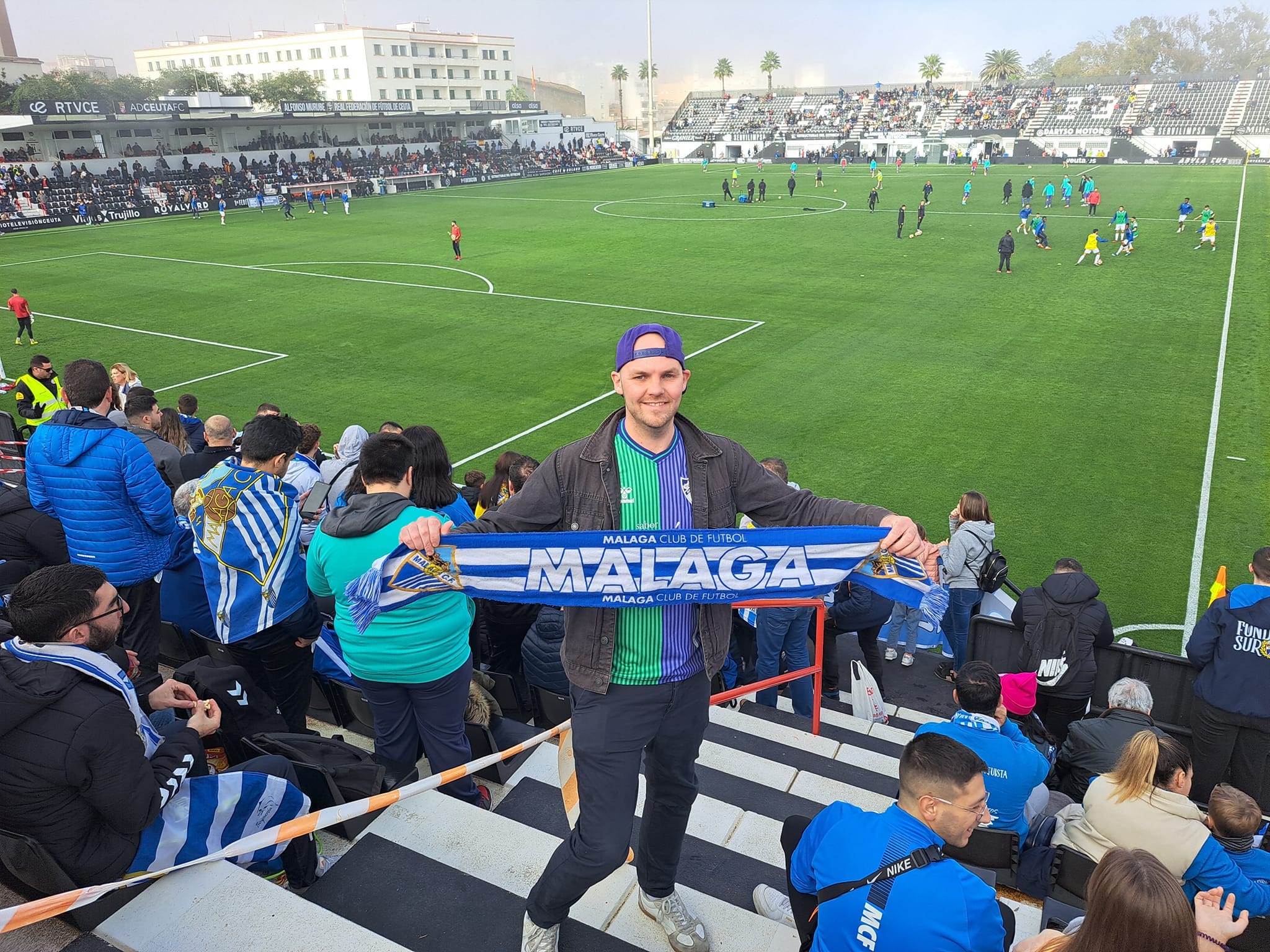
Although the stadium felt closed and compact, the game we witnessed was anything but as we witnessed an open, attacking spectacle. Ceuta had taken the lead before half-time, but Málaga responded with two goals of their own - the first a 25 yard left-footed thunderbolt from out wide which smashed in off the bar by Dioni (who became the all-time top goalscorer in the history of the Spanish third tier). Then, incredibly, Málaga’s hero that season, superhuman goalie Alfonso Herrero, made a rare mistake hitting a ball back into play for the home team to bundle home past his sprawled body on the floor. Another attack soon made it 3-2 and Málaga never really looked like getting back into it. Disappointing at the time, but we’d get the big prize of promotion at the end of the season, something Ceuta would also get just one year later, climbing to the second tier for the first time in 40 years (through their array of changing guises).
You will not have found many more delighted ‘non-Ceuta’ fans than me once the club had secured their promotion. I think there’s been a lot of love for the club from all areas of Spanish football and beyond, especially as word of the club seems to have grown exponentially in recent years. The club are well-run, the fans are ultra-passionate, and the team generally play good, fun football. Plus, there is that curiosity about its quirky location. Obviously, I think all those things are great. Yet, for me, the bond formed between Ceutans and Malaguistas that weekend was what truly endeared the club and the place to me the most. And those bonds have carried on since. With Ceuta joining Segunda this season, the Peña Tarzan have even been welcomed to join us at our usual prematch drinking spot at La Rosaleda, Bar Hermanos Madrid.
And just as I am about to press ‘send’ on this, Tomas has just texted me. There is a large table booked ahead of Saturday’s game, and I am welcome to join the Peña Tarzan and friends for beers and lunch again. Now, I really wish I was.
Far too often modern football often feels increasingly detached from place. Stories like this are a reminder of how much the game still depends on it. Thanks for sharing.